



Stories by
Brandie Jefferson
2 dozen Pitt researchers made Clarivate’s annual Highly Cited list
This select group of authors come from a wide breadth of research areas, and their papers are ranked in the top 1% by citation worldwide.
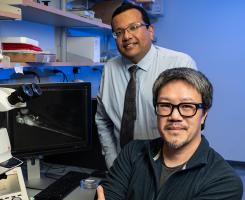
How a fish could lead to new hope for treating persistent wounds
An unexpected discovery by School of Medicine Professor Michael Tsang led to his startup Zegenex — and a new way to treat serious wounds.
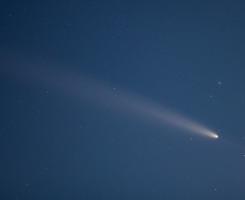
Look to the western skies this month to see a once-in-a-lifetime comet
We talked with Edward Potosky about how to see Tsuchinshan-ATLAS, which won’t be back for 80,000 years.
Ian Flynn’s research on Mars’ lava buildup was highlighted by the journal Icarus
The study validated findings of spatter cones by comparing the extraterrestrial structures to the aftermath of an Earth volcano.
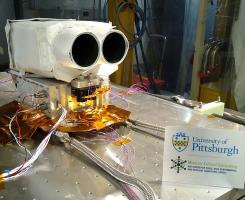
A new Pitt class is taking engineering to greater heights
Space engineering is just the first Swanson School course in a new effort to train students for the growing demand in aerospace and other industries.
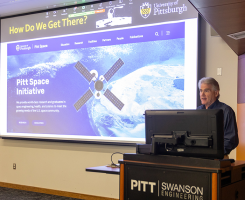
Pitt Space is bringing researchers together at the start of a new space race
The new initiative will focus on research and workforce development in space engineering, biomedicine and science.
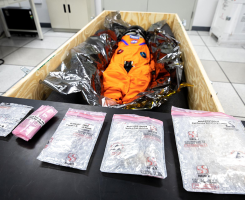
A moon tree is taking root near Pitt’s historic Allegheny Observatory
A seed that circled the moon with NASA will be planted in Riverview Park. Celebrate its arrival on Oct. 6.
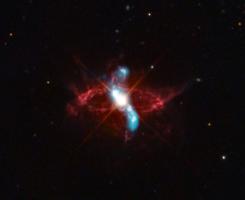
A rare stellar explosion will soon reveal a ‘new’ star. Here’s how to see it.
Visible with the naked eye, the nova will be the brightest one most people ever see, says Pitt astronomer Carlos Badenes.

What does the future of space medicine look like?
Pitt distinguished professor Bill Wagner discussed how new materials and techniques could change medical care in space.
Making batteries takes a lot of lithium. Some of it could come from wastewater.
Water from Marcellus shale gas wells could supply up to 40% of U.S. demand for the metal, according to a new Pitt study.