



Stories by
Brandie Jefferson
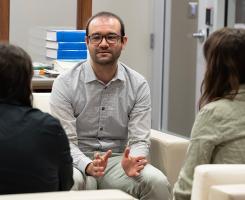
This new Pitt service helps investigators do research that’s ethically sound
The interdisciplinary RECS team consults with researchers on ethical questions and connects them with philosophers and historians elsewhere in the University.
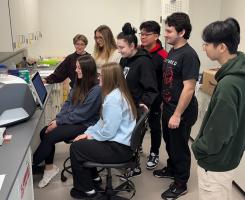
Pitt-Greensburg’s new benchtop NMR device lets students study molecular structures
The undergraduate-friendly nuclear magnetic resonance instrument will ensure student researchers gain hands-on experience without having to leave campus.

Pitt researchers took the most detailed images ever of bacteria-killing viruses
The new images could help researchers engineer the phages to attack specific targets.

Amir Alavi was named editor-in-chief of a new Nature Portfolio journal
The B.P. America Faculty Fellow in the Department of Civil and Environmental Engineering will lead npj Metamaterials.

Pitt is among the top 50 universities at producing research that leads to patents
The University ranked No. 43 on Clarivate’s list of universities powering global innovation.

Evan Schneider has been named a Sloan Research fellow
The assistant professor of physics and astronomy is using supercomputers to understand the processes that shape galaxies.
Xing Chen won 3 grants for her research to better understand and restore sight
She’s working on bringing the implant, which could present a new way to restore patients’ sight, to market with startup Phosphoenix.
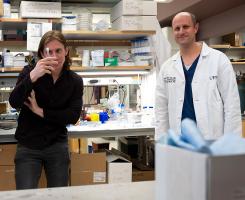
Chronic pain treatments can be dangerous and ineffective. These Pitt researchers are working on a solution.
Supported by NIH funding, the Vanish Therapeutics team is working to bring a bioabsorbable nerve stimulator to market.
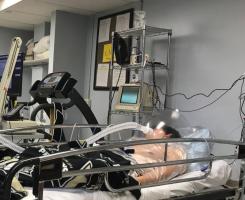
A NASA-funded Pitt team is exploring the benefits of sleeping in space
Kate Flickinger’s research on lower metabolic rates could help astronauts safely undergo long-duration spaceflights one day. It could also help ICU patients here on Earth.
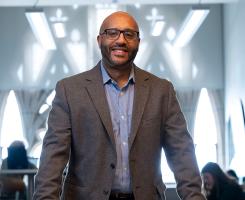
This social scientist turned entrepreneur supports Black parents with an innovative program
Parenting doesn’t come with a manual, but it does come with community, thanks to James Huguley.