



Propel scholarship, creativity and innovation
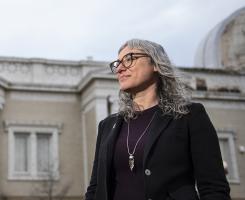
A project co-led by Rachel Bezanson ‘expanded our view of the early universe’
The American Astronomical Society is honoring the James Webb Space Telescope UNCOVER team for changing researchers’ understanding of cosmic evolution.

A new Pittsburgh life sciences startup incubator will grow early stage companies
The Pitt incubator, located in Oakland, will provide a much-needed link in the regional life sciences ecosystem.

Hadi Noori won an NSF grant to develop an energy-efficient welding process
The assistant professor of engineering at Pitt-Bradford will receive $400,000 to study the method, which could have applications in extreme environments like space.

Pitt is globally ranked in 33 subjects, per ShanghaiRanking
The University placed among the world’s top 50 in human biological sciences, clinical medicine, nursing and six other subjects.

Pitt’s first undergraduate cancer-focused research program is underway
PICTE offers a rare and transformative opportunity for early career scientists to step directly into the world of translational cancer biology.

The story of Pitt’s Horror Studies Center was published in Film Quarterly
The article explains the links between director Adam Lowenstein’s story, the collection and “Night of the Living Dead.”

2 Pitt professors won American Chemical Society honors
Angela Gronenborn won the Nakanishi Prize and Kay Brummond took home an Arthur C. Cope Scholar Award.

This art installation turns a century of Nationality Rooms history into poetry and pattern
The exhibition by Susy Bielak, Fred Schmalz and Aaron Henderson, which is based on materials from the University’s Archives and Special Collections, will run through July 2027.

42 stories, facts and figures you should know about Pitt’s Cathedral of Learning
We gathered some of our favorite tall tales from the storied landmark in celebration of its 100th birthday.

Shelome Gooden has been appointed to new joint leadership roles
She will serve as associate vice chancellor for research in the humanities, arts, social sciences and related fields, and as associate vice provost for faculty advancement and leadership development.